Fireproof blanket or fireproof bag for an electric scooter: when each one works
If you have started looking at safety products for lithium batteries, you will have come across two formats: the fireproof blanket and the fireproof containment bag. They share a family of materials, but they answer two different moments. Understanding which moment belongs to each one makes the choice straightforward.
The short answer: the bag works every day, from before anything happens. The blanket works in the instant you decide to step in. In many homes the two live side by side, and that is a very sensible combination.
Containment and suppression: two different jobs
This is the distinction that organises everything else.
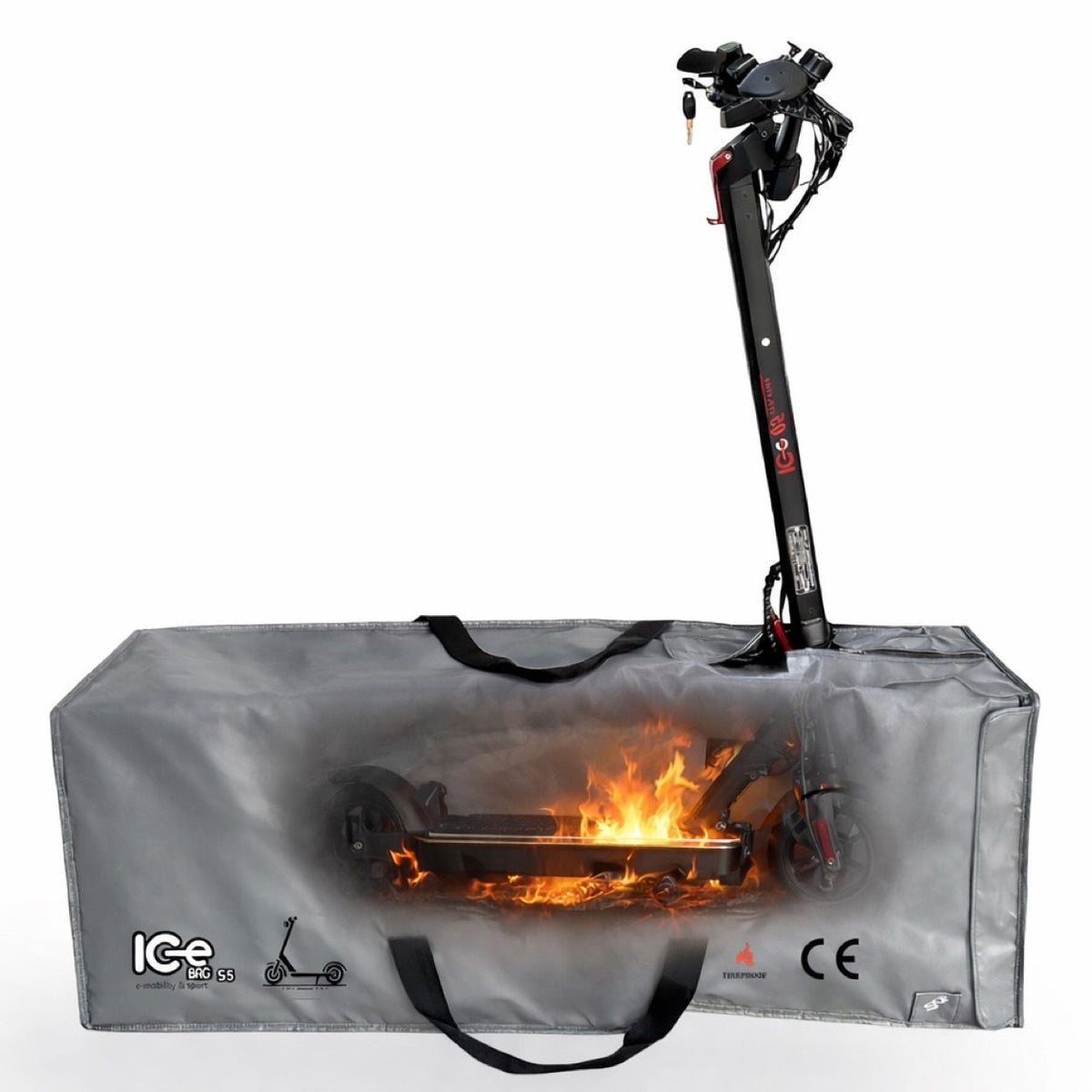
Containment means keeping the event inside a closed enclosure: the heat, the flames and the gases stay in and do not reach what is around them. That is the job of a containment bag with the scooter already stored inside.
Suppression means acting on a source to limit it: covering it, isolating it, reducing the outside oxygen supply and slowing the spread towards whatever is nearby. That is the job of a blanket once you place it.
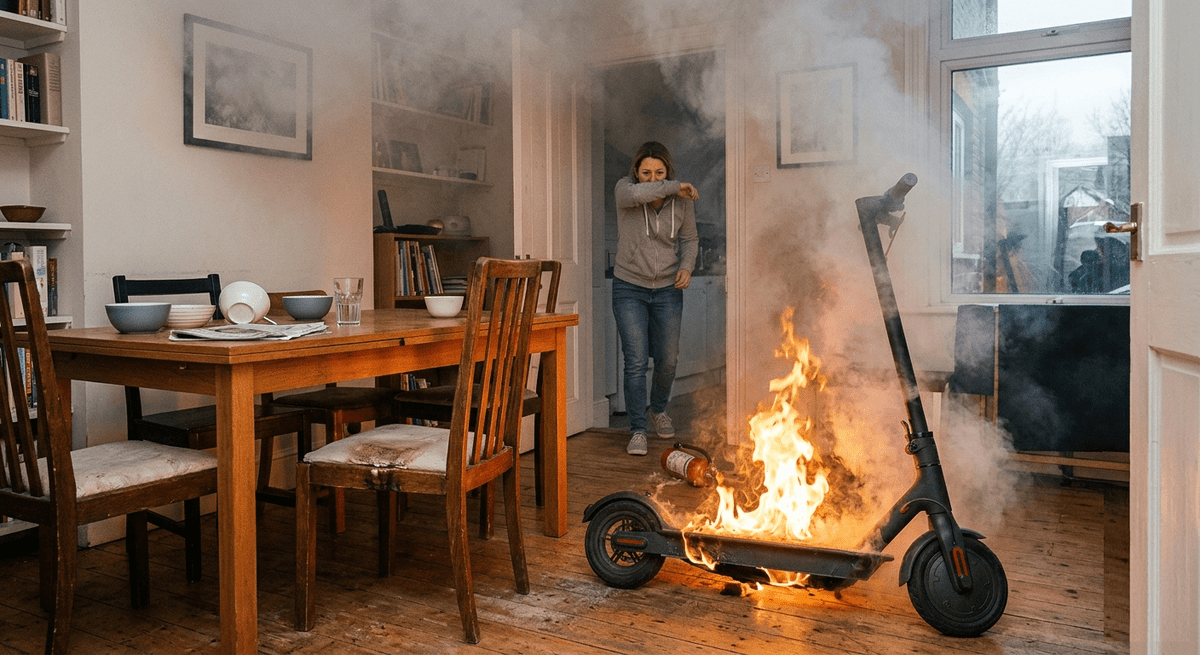
One chemical detail is worth knowing: a lithium cell in thermal runaway releases oxygen within its own reaction. So in that specific scenario the blanket's value lies mainly in isolating the source and protecting the surroundings while you evacuate. Fire services in the UK, Australia and the United States all give the same primary recommendation for a battery fire: get out, close doors behind you and call emergency services. Both products serve that sequence, each from its own moment.
The fireproof blanket: an emergency response for any device
The blanket is the tool you have to hand when something starts to go wrong and you want to gain seconds. Its great strength is versatility: it works regardless of the size and shape of the device, so it covers the whole battery ecosystem in the house.
It is especially useful for everything that does not live inside a bag: a laptop heating up on the table, a loose scooter or bike battery, a power bank, a cordless tool in the workshop, a charger. You unfold it, place it over the source and create a thermal barrier that protects furniture, flooring and nearby surfaces while you move away and call emergency services.
The ICe fireproof blanket uses the same technical fabric as the bag range. Its natural home is hanging up or in a drawer near the charging point, where you can reach it in a couple of seconds. We cover it in detail in the guide to the ICe fireproof blanket.
The fireproof bag: permanent containment for storing and for charging
The bag works at the opposite moment: before. The scooter is inside, folded, with the bag closed, so if something happens while you sleep or while you are out, the event is already inside an enclosure built to hold it. The decision was made when you put the scooter away, and that is what makes it comfortable.
That is also its strength during charging. The whole ICe BAG range, from S1 to S5, includes a cable pass-through, so you can charge with the bag closed. The range has been tested at the independent laboratory ATS Electronic Technology (report ATSR240420811) against a real thermal runaway, with a complete scooter and its battery inside the closed bag. The result was no flame escape to the outside, an intact enclosure and low smoke emission. The three layer complex of 1.7 mm is rated UL 94 V-0 and the outer fabric UL 94 VTM-0, both according to SGS reports.
The five formats and the use each one answers are explained in the guide to the ICe BAG range.
Comparison by moment of use
| ICe fireproof blanket | ICe BAG fireproof bag | |
|---|---|---|
| Moment it acts | In the instant you decide to step in | Every day, from before anything happens |
| Type of job | Suppression: covers, isolates and protects the surroundings | Containment: keeps the event inside the enclosure |
| Devices where it shines | Laptops, loose batteries, power banks, cordless tools, chargers | A complete electric scooter with its battery |
| How it comes into play | You unfold it and place it over the source | It is already in place, with the scooter inside |
| Where to keep it | Hanging up or in a drawer, always within reach | At the usual charging or storage spot |
| During charging | Ready alongside, in case you want to step in | The scooter charges inside, thanks to the cable pass-through |
| Fabric | The same technical fabric as the ICe range | Three layer complex of 1.7 mm, UL 94 V-0 |
How they complement each other at home
The most comfortable combination is simple: the scooter lives inside the bag, both when stored and when charging, and the blanket hangs nearby for any other battery powered device in the house. That way you cover the large, predictable device with permanent containment, and you have the fast response already sorted for the laptop, the power bank or the bike battery.
If you are only going to start with one, let your routine decide. If your main concern is the scooter charging overnight, start with the bag. If you want to cover several battery devices spread around the house, start with the blanket.
Whatever your combination, the safety sequence is always the same: move away, close doors behind you and call emergency services, telling them it is a lithium battery.

Written by Oscar Creix