Where Is the Safest Place to Store Your Electric Scooter at Home?
You bring your electric scooter home every evening. You fold it, lean it against the wall, plug it in, and think nothing more of it. But where you store your scooter at home matters more than most riders realise. Lithium batteries don't announce when they're about to fail. And when they do, the consequences can be devastating.
This guide walks you through the safest storage options, the places you should avoid, and the one precaution that can make all the difference.
Why Storage Location Matters
Electric scooter batteries store a large amount of energy in a compact space. Under normal conditions, they're stable. But lithium-ion cells can degrade over time, from overcharging, deep discharges, physical damage, or simply age. A damaged cell can enter a process called thermal runaway: an uncontrolled chemical reaction that generates intense heat, fire, and toxic smoke within seconds.
What makes this particularly dangerous at home is that most fires start while the scooter is charging, often overnight, when everyone is asleep. The location where you store and charge your scooter determines how quickly a fire can spread, whether your family has time to escape, and how much damage is done.
Places You Should Avoid
The bedroom
It might seem convenient, but storing or charging your scooter in the bedroom is one of the worst options. A battery failure at night fills the room with toxic smoke within minutes, before you can wake up and react.
The hallway or entrance
It's the most common storage spot, and the most dangerous. Your hallway is your main escape route. If the scooter catches fire there, you cannot exit safely.
Under the stairs
In buildings with shared stairways, storing the scooter underneath blocks a shared evacuation route and concentrates heat and gases in a narrow space. It's prohibited by most fire safety regulations in residential buildings.
Near heat sources or flammable materials
Radiators, boilers, stoves, chemicals, paints, paper, or curtains amplify the risk. If the battery catches fire, these materials can quickly spread the fire through your home.
The Best Storage Options
A detached garage
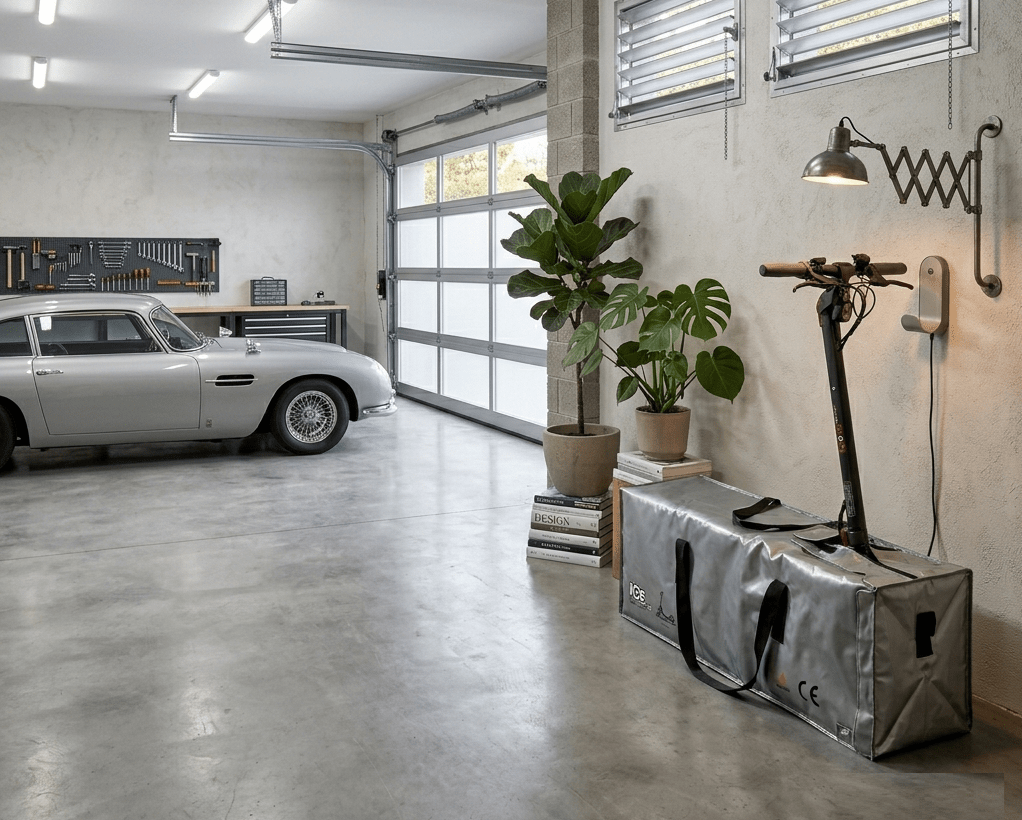
If you have a garage separate from your home, it's the safest option. Ventilation, non-flammable surfaces (concrete), and physical separation reduce risk. If the garage is attached to the house, add an ICe BAG to contain a potential incident.
A utility room or storage cupboard
A room not adjacent to bedrooms, with natural ventilation and away from chemicals, is a good alternative in houses and apartments.
A covered balcony or terrace
If you live in a flat and have a covered balcony, it's a good option: natural ventilation, non-combustible surface, and away from sleeping areas. Protect it from direct rain and extreme temperatures.
The one precaution that makes the difference
Even in the best possible location, a battery can fail. The ICe BAG is a fireproof containment bag, tested in an independent laboratory against a real thermal runaway, designed specifically to contain an electric scooter battery fire. You store and charge the scooter inside the bag. If something fails, the bag contains the heat, flames, toxic gases and ejected material, giving you time to evacuate and call emergency services.
A good storage spot reduces risk. A fireproof bag turns it into a contained incident. Combining both is the only real way to protect your home and family against an unexpected failure.

Written by Oscar Creix