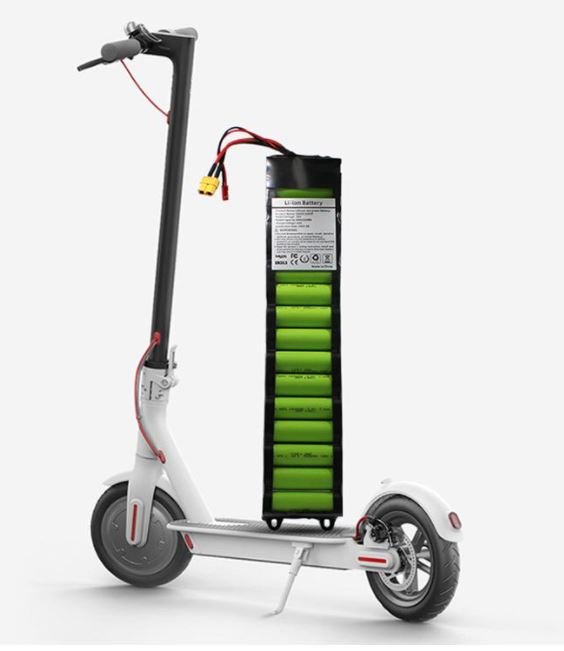
How Long Does an Electric Scooter Battery Last, and How to Extend Its Life
The battery is the most expensive part of an electric scooter, and the one that most determines your daily experience. Understanding how long it lasts and how to care for it properly can save you hundreds of euros in replacements and, at the same time, reduce safety risks.
How long does an electric scooter battery last
The useful life of a lithium-ion battery is measured in two units:
- Charge cycles: most scooter batteries are designed for between 500 and 1,000 full cycles before losing 20-30% of their initial capacity.
- Years of use: in practice, between 2 and 5 years depending on usage intensity and care.
A "full cycle" is the sum of discharges equivalent to 100%. For example, going from 100% to 50% twice is one cycle.
What degrades the battery fastest
Repeated deep discharges
Going down to 0% regularly stresses the cells. Try not to go below 20%.
Unnecessary charges to 100%
Leaving the battery at 100% for hours or days accelerates chemical degradation. If you're not going to use the scooter in a couple of days, leave it between 40 and 60%.
Extreme temperatures
Lithium batteries degrade fast in heat (direct sun, closed car in summer) and don't work well in cold (below 0°C). The ideal range for use and storage is 10-30°C.
Non-original chargers
A charger with incorrect voltage or amperage is not only a safety risk, it also damages the battery with each use.
Mechanical damage
Bumps, falls or water immersion can damage individual cells even if the battery keeps working. Degradation in these cases accelerates.
10 tips to extend your battery life
- Charge between 20% and 80% whenever you can.
- Don't leave the battery at 100% for hours. Unplug when finished.
- Don't go down to 0%. Recharge when you're at 20%.
- If you won't use it for weeks: store it at 40-60%.
- Use only the manufacturer's original charger.
- Wait 20 minutes before charging after a ride, let the battery cool down.
- Store the scooter at room temperature (10-30°C), not in the car in the sun.
- Charge in a well-ventilated location. Excessive heat during charging speeds up degradation.
- Avoid extreme discharges. If battery is low, slow down to avoid stressing the cells.
- Visually inspect the battery every few months. Swelling or deformation are end-of-life signs.
When to replace the battery
Clear signs the battery has reached the end of its useful life:
- Range has dropped below 70% of the original.
- Charging doesn't reach 100%.
- Battery gets excessively hot during charging.
- Visible swelling or deformation.
- Power drops or unexpected shutdowns during use.
Replacing a battery at the end of its useful life doesn't just restore range, it also eliminates a growing risk of a serious failure. Always use original manufacturer replacement parts.
Safety while the battery ages
As a battery ages, the risk of failure increases. In those final years of useful life, it makes more sense than ever to charge and store the scooter inside an ICe BAG, tested in an independent laboratory. It is an additional containment layer that protects your home and your family if something goes wrong.

Written by Oscar Creix