
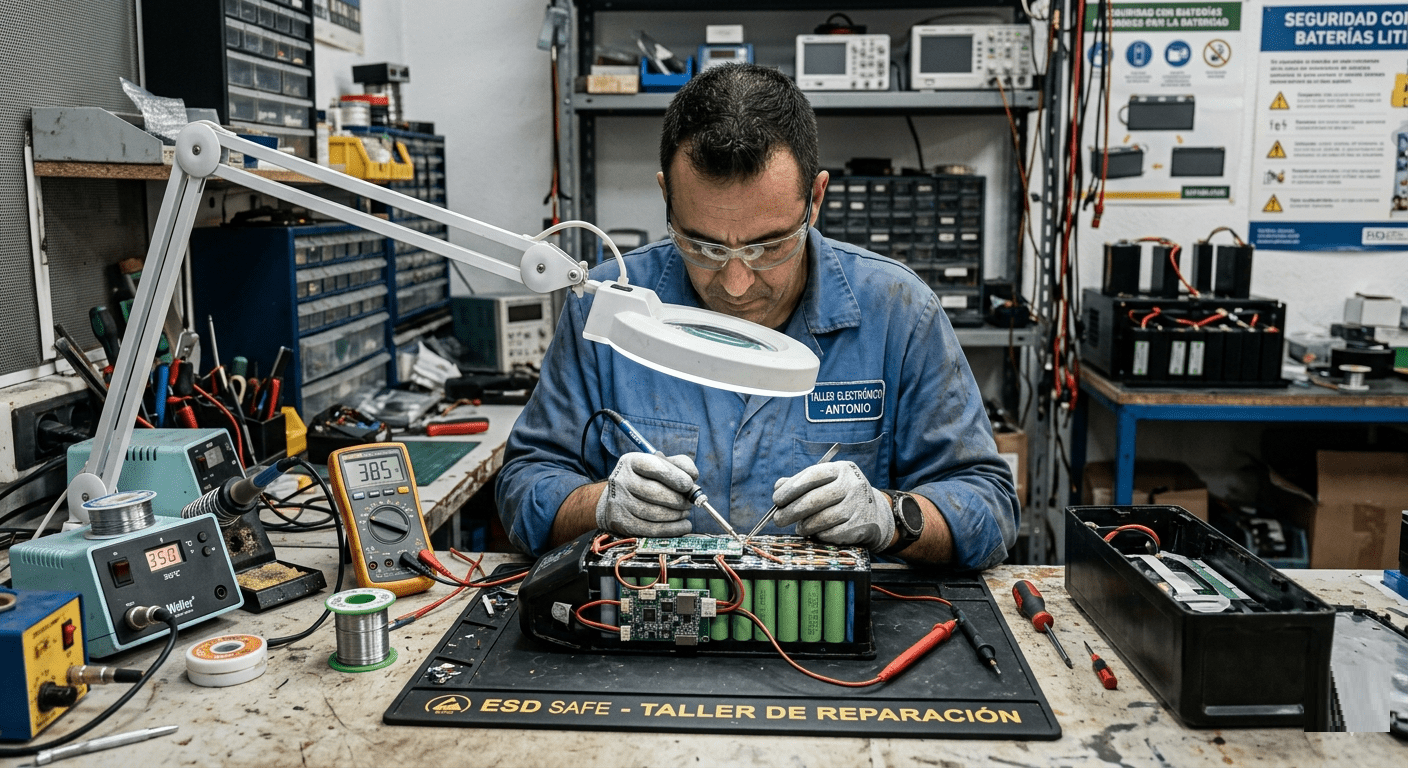
What to do after an electric scooter battery fire
An electric scooter battery fire is a rare but very serious emergency. Most guides focus on prevention (rightly so), but leave a gap: what do you do just after the fire is out and you're safe? The hours that follow make the difference between a managed incident and a problem that drags on for weeks.
If the fire is happening right now, start here: what to do in the first 60 seconds. Come back to this guide once you are safe and the fire is out.
This guide covers the practical steps after a lithium battery fire: what to do in the first hours, who to call, how to document for your insurer, and how to handle the battery remains. It's written for home users, not emergency professionals.
First rule: never go back in too soon
If you had to evacuate, don't re-enter the space until the fire service gives you the green light. Lithium batteries can reignite. They can catch fire again hours after they look extinguished. Fire services call this "residual thermal runaway", and it's why they sometimes stay on scene for hours after it all looks visually over for you.
Don't go back for pets, valuables or anything else either. If you got everyone out, you've already won the most important battle.
Calls to make in the first 24 hours
1. Fire service
If they aren't already there, call them before anything else. Even if the fire looks out, they need to assess the space and confirm there's no residual risk. It's free and they will provide an official report that your insurer will ask for.
2. Your insurer
Contact your home insurer as early as possible. Many policies have 24-48 hour notification windows. Note: date and time of the incident, apparent cause, observed damage, any third parties affected. The claims handler will tell you what documents they need.
3. Scooter manufacturer service
Notify the manufacturer or the distributor. If the battery was under warranty, they may be required to investigate and, in some countries, to notify the product safety regulator. This can also be relevant for your claim.
4. Building manager or owner
If you rent or live in a block, inform them immediately. The building insurance may have its own procedure and will want to coordinate with your policy for structural damage.
5. Hazardous waste collection
The damaged battery is hazardous waste, don't throw it in household rubbish or the recycling bin. We explain how to handle it below.
Safety when you re-enter
When fire services clear you to go back in, take these precautions:
- Ventilate the space for at least an hour before staying inside. Lithium combustion gases include hydrogen fluoride (HF), hydrogen cyanide and carbon monoxide, toxic even at low concentration.
- Don't touch the battery or the charred remains without nitrile gloves and eye protection. Residues can still be chemically active.
- Check smoke alarms, as heat may have damaged them even if they didn't trigger audibly.
- Cut power to the affected zone until an electrician checks the wiring. Heat may have damaged nearby insulation.
- Don't sleep in the home for the first 24-48 hours if the fire was significant. Smell and invisible residues can affect your health.
What to document for insurance
Documentation is key to getting your claim processed quickly. Do this before cleaning anything:
- Photos and video of the state of the home, the burnt scooter, the charging point, damage to furniture and walls. Lots of images, from multiple angles.
- Damage inventory with a basic estimate. It doesn't need to be exact, the loss adjuster will adjust it.
- Original invoice for the scooter and charger. If you can't find them, your bank statement may show the purchase.
- Conformity certificates for the scooter and battery (CE in Europe, UL in US/Canada, AS/NZS in Australia/NZ) if you've kept them.
- Fire service report. Request it within the timeframe given by your local service. It can take days or weeks.
- Witnesses. If a neighbour helped you evacuate or saw the incident, ask for their details in case the insurer needs a testimony.
How to dispose of a damaged battery
A damaged lithium battery never goes in the bin. Correct protocols across the 5 markets:
United Kingdom
Call the local Council or take the battery to a Household Waste Recycling Centre (HWRC), identifying it as a "damaged lithium battery". Many centres have a dedicated container. Alternative: manufacturer take-back schemes.
United States and Canada
Use Call2Recycle (call2recycle.org / call2recycle.ca), with collection points in most stores. Label the battery as "damaged" and transport it in a fireproof containment bag if possible.
Australia and New Zealand
B-cycle (Australia) and Phoenix Recycling Group (NZ) collect damaged lithium batteries. Many Australia Post outlets and Bunnings stores are drop-off points.
In every case: never send a damaged battery by regular courier. Transport requires a dangerous goods protocol.
Where to store the damaged battery before drop-off
Days may pass between the fire and the drop-off. During that time:
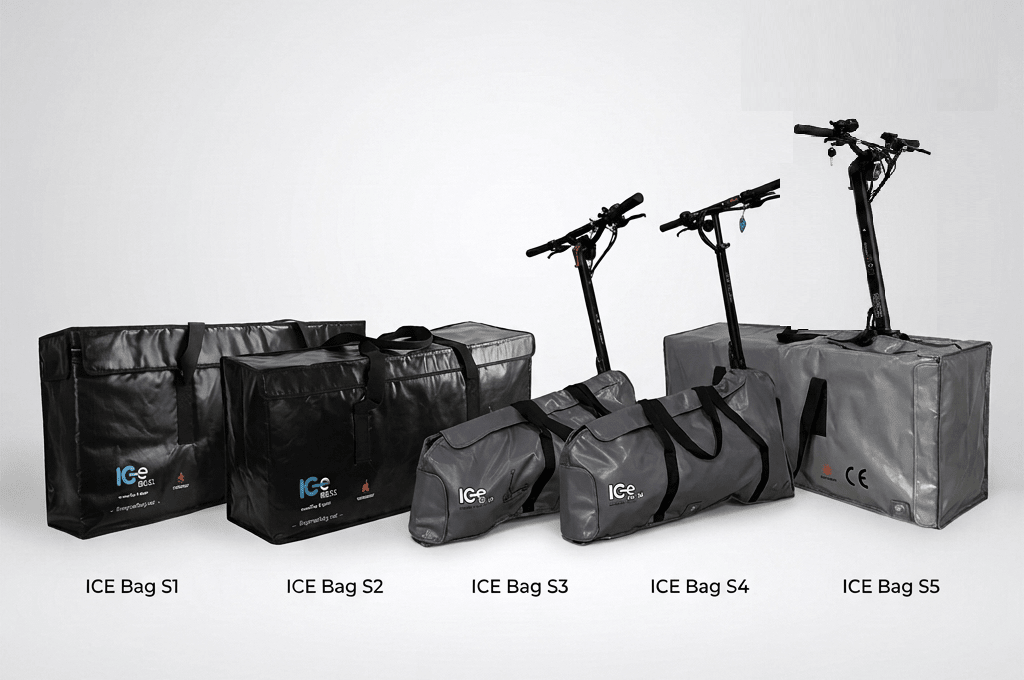
- Place it in an ICe BAG fireproof bag or a metal container with sand or vermiculite.
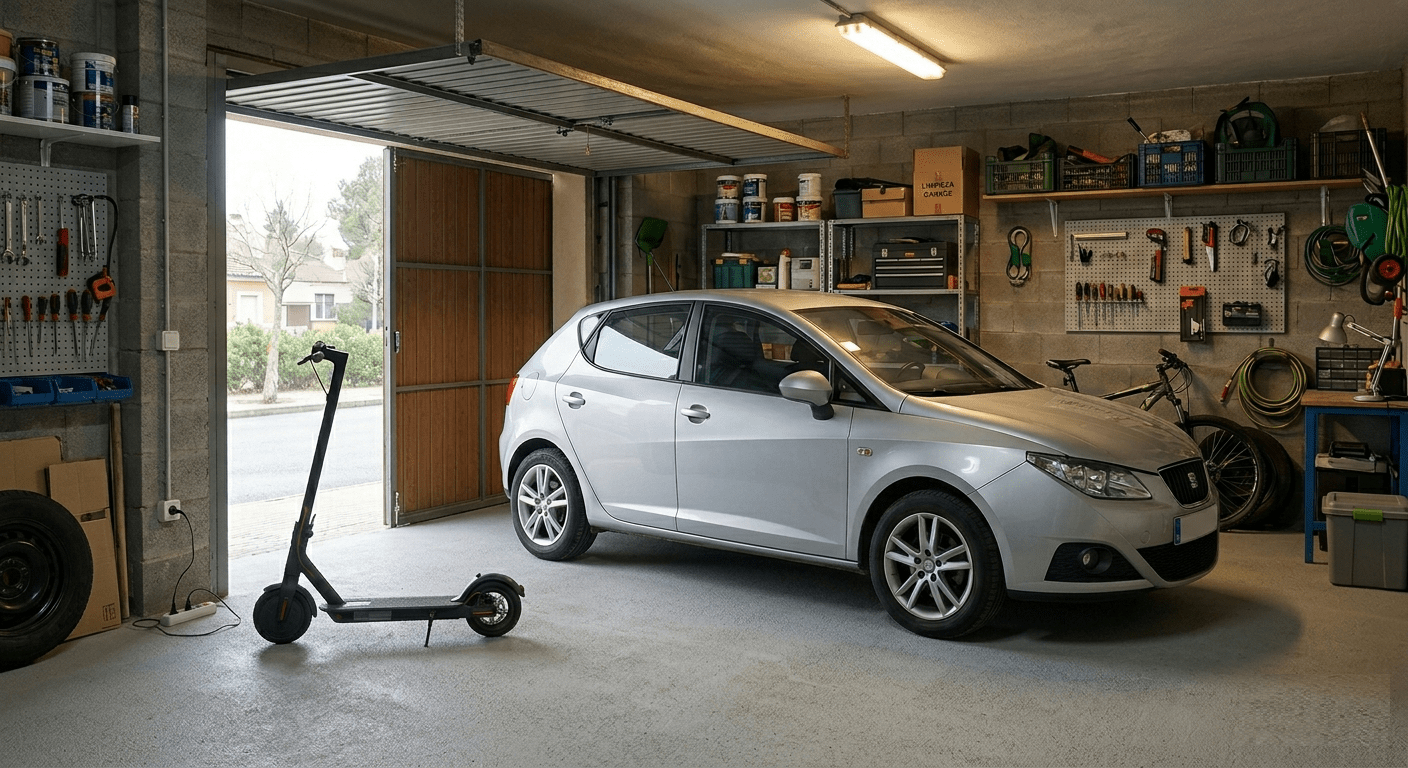
- Keep it outside your living space: balcony, detached garage, ventilated shed.
- Don't put it in water, because lithium batteries can react violently with water, and you would contaminate already-hazardous waste.
- Keep it away from flammable materials until drop-off.
Cleaning the space
Before cleaning, make sure all photos are done and that your insurer has visited or authorised cleaning. Then:
- Ventilate for several hours.
- Use nitrile gloves, goggles and an FFP2/FFP3 mask.
- Pick up solid residues with a shovel and metal bucket, not a household vacuum, which can be damaged and spread particles.
- Clean surfaces with soapy water and disposable cloths. Dispose of the cloths as hazardous waste.
- For lingering smells, use baking soda or activated charcoal; avoid chemical air fresheners that only mask.
- Consider a professional post-incident cleaning service, as many insurers cover it.
What to learn from the incident
A battery fire is a strong signal that something in your charging and storage setup needs to change. Review these points before using any new battery:
- Were you charging with the original charger?
- Were you charging unattended or overnight?
- Had the scooter suffered a recent knock, fall or water exposure?
- Did the battery show prior warning signs (swelling, smell, excessive heat, power cut-outs)?
- Did you have working smoke alarms?
- Were you charging in a clear area away from flammable materials?
If the answer to any of these is "no" or "not sure", reinforce that point for the future. A fireproof bag tested in an independent laboratory, smoke alarms and disciplined supervised charging are the three measures with the best cost/benefit ratio to avoid a second incident.
Coming out of a fire with no injuries is the best possible news. From there, a handful of orderly steps turns a bad day into useful learning and a home that feels safe again.

Written by Oscar Creix
,%20but%20leave%20a%20gap:%20what%20do%20you%20do%20just%20after%20the%20fire%20is%20out%20and%20you're%20safe?%20The%20...)