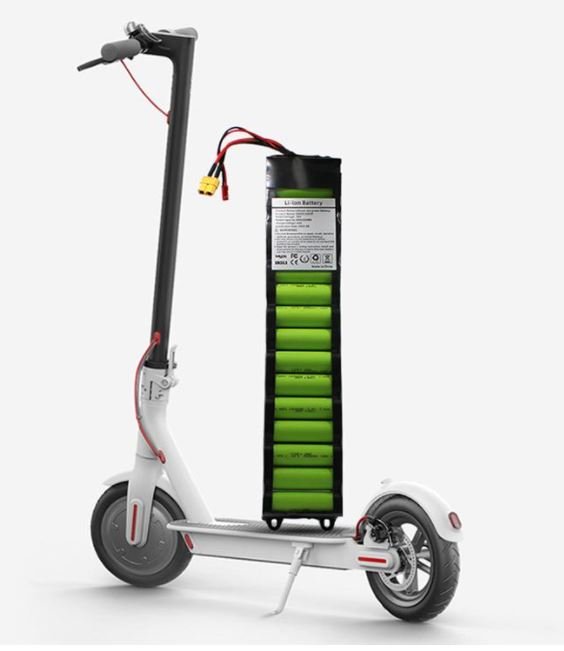
Signs your electric scooter battery needs attention
Most electric scooter batteries give warnings before becoming a serious problem. The catch is that those warnings are easy to miss if you don't know what to look for. This guide helps you spot them in time, calmly and without alarm.
None of these signs mean something bad is about to happen immediately. They mean the battery is asking for attention and that it's wise to act sensibly before continuing to use it and, above all, before charging it again.
1. Range drops noticeably
This is the most common sign and the easiest to measure. If your scooter used to cover 30 km and now barely reaches 18-20 with the same use and temperature, the battery is ageing. A gradual drop over the years is normal. A sharp drop over a few weeks is not, and it deserves a check.
2. It heats up more than usual
A battery that's warm after intensive use or a charge is normal. A battery that becomes clearly hot to the touch (uncomfortable to hold) during charging or a normal ride is not. Abnormal heat is one of the most reliable indicators that something inside isn't working properly.
3. The casing has deformed or swelled
This is the most serious sign on the list. If the battery area (or the battery itself, if it's removable) looks bulged, swollen or deformed, stop using the scooter and don't charge it. A swollen cell is releasing gases internally. Take it to an authorised service centre.
4. Strange smell
A sweet, chemical or solvent-like smell near the battery is not normal. It's one of the first signs that a cell is degrading. If you notice it, move the scooter away from flammable materials and don't charge it until a technician has checked it.
5. Charging behaves oddly
Signs to watch for: the scooter takes much longer than usual to charge, doesn't reach 100 %, turns off on its own, or the battery indicator jumps in illogical ways (from 60 % to 20 % suddenly). It usually points to unbalanced cells or a battery management system with issues.
6. The scooter has taken a hard knock
It's not a visible symptom, but it's an equally important warning. If the scooter has fallen heavily, been run over, been submerged or spent a lot of time outdoors, treat it as suspect even if it works normally. Internal cell damage isn't always visible from outside.
What to do if you spot one of these signs
The priority order is simple and calm:
- Don't charge the battery. Charging is the most sensitive moment; if there's a warning sign, that's the first thing to pause.
- Move the scooter away from flammable materials. Take it to a hard, ventilated surface, away from curtains, sofas or furniture.
- Don't store it on an exit route. Make sure it doesn't block the door or the evacuation corridor.
- Take it to an authorised service centre. Don't open the battery or try to repair it yourself: lithium cells aren't to be handled at home.
The extra layer of peace of mind
While you decide what to do with a suspect battery (or simply for your normal daily use), a fireproof containment bag or blanket gives you margin. If a battery that seemed fine fails during charging or storage, the fireproof material contains the heat and gases long enough for you to react calmly. It doesn't replace a technical check, but it turns a potentially bad moment into something manageable.
In summary
Batteries do give warnings: range loss, abnormal heat, swelling, a strange smell, erratic charging or a serious knock are the six signs worth knowing. None are reason to panic, all are reason for attention. Catching them in time and not charging a suspect battery again is, almost always, the difference between a battery replacement and a serious problem.
And if you want to add that layer of peace of mind to your daily routine, an ICe BAG fireproof bag protects your home while you charge or store your scooter.

Written by Oscar Creix